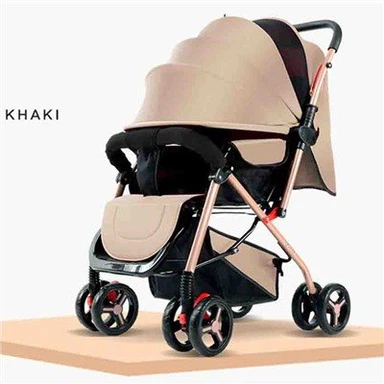


Walkers Can Help Children Practice Walking And Promote Their Development.
Aug 11, 2021
Walkers can help children practice walking and promote their development.
Many mothers think that baby walkers can help their babies to do passive exercises and practice walking, but scientists’ research results are far from it: baby walkers are not conducive to the physical and mental development of young children.
Follow-up investigations show that: the average time that babies who use walkers can sit, crawl, and walk are 6.73 months, 6.68 months, and 11.66 months, respectively, which is significantly later than that of babies who don’t ride walkers who can sit and crawl. The average time of the peace meeting was 5.39 months, 5.84 months and 10.82 months.
7 and 8 months old is the best time for babies to practice rolling and climbing. When they ride on a walker, their freedom of movement is greatly restricted, and the opportunities for practice are reduced. Thanks to the walker, the child can move freely at home, roll, The attraction of crawling to the baby is greatly reduced. Due to the lack of interest and practice, the child's sports development is affected to a certain extent.
Learning to walk requires coordination of eyes, hands, and feet. The large safety tray in front of the walker blocks the child's vision. The baby cannot see his walking feet and does not understand how he walks. Toddlers need "strength", but because of the sliding effect of the wheels, the child can slide with the force of the car and "walk", relying on the baby walker can easily stand up from the seat, lack of real exercise, Naturally it is not conducive for children to learn to stand and walk.
Ideal: The baby walker is a safe babysitter.